

When most people think about French wine, they picture grand châteaux, old cellars and centuries of tradition.
After nearly two weeks travelling across France, that's not what I'll remember.
What I'll remember are the young families.
Yesterday was our second-last day on the road and we spent it back in Beaujolais, catching up with both old friends and new discoveries.
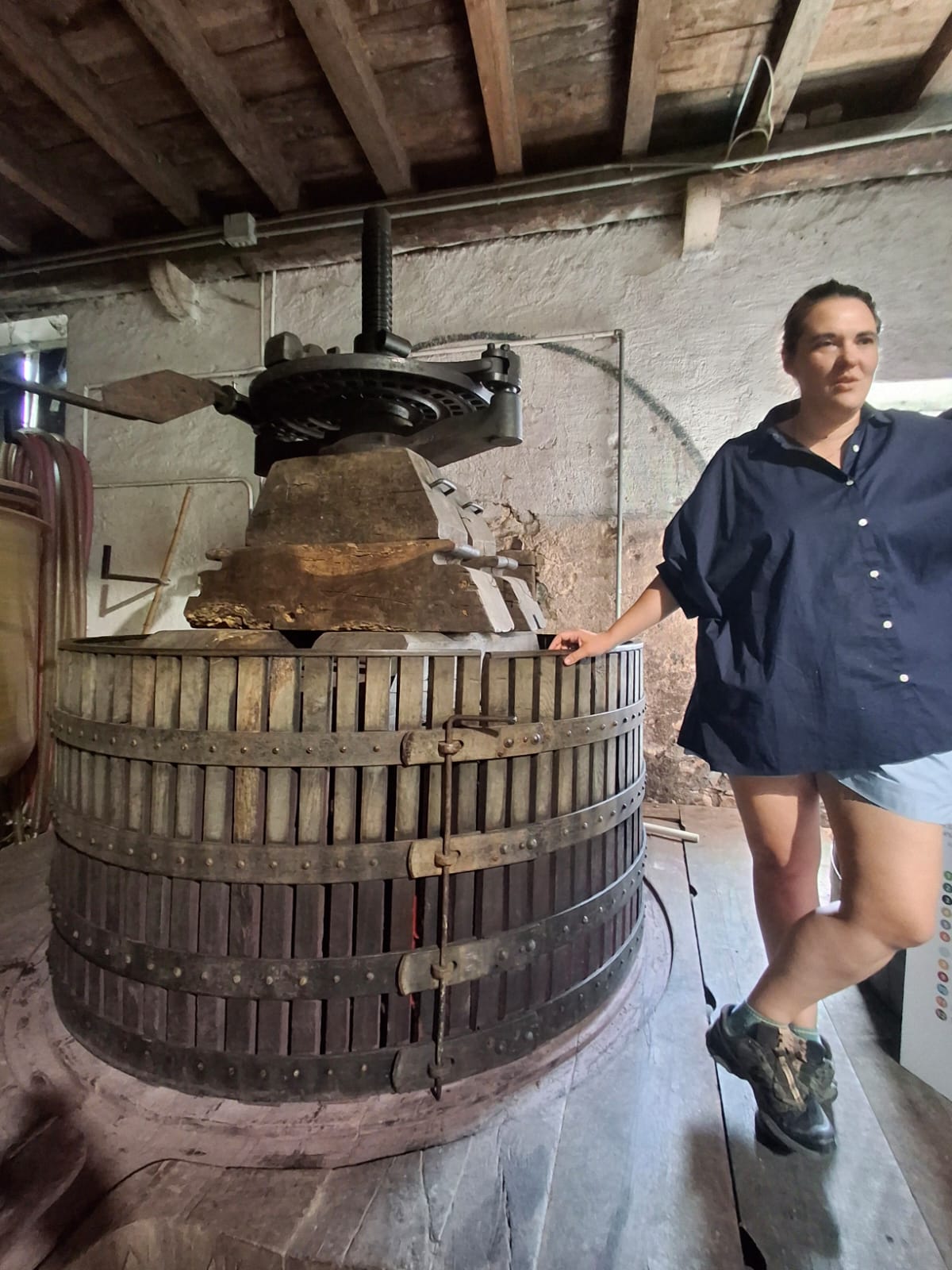
While Miles headed to Mâcon to visit Pierre at Coteaux des Margots, one of our earliest producers and the maker of an Aligoté that remains hugely popular with our restaurant customers, I travelled to Lantignié to meet a young winemaker named Cosima Bassouls.
It turned out to be one of the most memorable visits of the trip.
Cosima is just 28 years old and represents something we've seen time and time again throughout our travels.
A new generation taking over family estates and pushing them forward.
A few years ago, after the loss of one of her parents, Cosima inherited the family estate. Historically, most of the grapes had been sold to négociants rather than bottled under the family's own label.
She could have continued doing things the way they had always been done.
Instead, she chose a different path.
After studying and gaining experience, she returned home determined to build something of her own. She told us she explained to her father that if she was going to take on the estate, she needed the freedom to do things her way and make her own mistakes.
I loved that.
It's a mindset we've encountered repeatedly throughout this trip.
Respect for tradition, but not fear of change.
The wines were outstanding.
Everything is certified organic and there is a clear sense of purpose behind what she's doing. Her Chardonnay, grown on pink granite soils, was beautifully precise and energetic. The standout wines, however, were two Beaujolais-Lantignié cuvées grown on different soil types—one pink granite, the other blue stone.
Made in exactly the same way, they provided a fascinating lesson in terroir.
Same winemaker.
Same philosophy.
Completely different wines.
We were genuinely blown away by the quality.
But what struck me most wasn't the wine.
It was how familiar the story felt.
Over the course of this trip we've met an extraordinary number of winemakers in their late twenties and thirties.
Maxime Lafouge in Burgundy.
Paul Chéron in the Côte de Nuits.
Cosima in Beaujolais.
And many more.
They're ambitious, curious and determined to take what previous generations built and push it to the next level.
Almost all of them have young families.
Children.
Mortgages.
Businesses to run.
The realities of everyday life.
The stereotype of French wine is grand estates and old-world formality.
The reality is very different.
These are young families building businesses.
They have children in daycare.
They worry about cash flow.
They juggle administration, sales, farming and family life.
The more producers we've met, the more familiar their lives have felt.
The only difference is that before breakfast they're probably already out in the vineyard.
Climate change has been another recurring theme throughout the trip.
It's impossible to ignore.
We've spent much of the last fortnight dealing with temperatures in the high thirties, and every producer is thinking about what comes next.
Organic farming.
Cover crops.
Agroecology.
Water retention.
Alternative grape varieties.
These aren't theoretical discussions anymore.
They're everyday realities.
What has impressed me most is that many of the people leading that change are the younger generation.
They're open-minded.
They're willing to experiment.
They're prepared to challenge old assumptions.
And they're doing it without losing sight of what makes these regions special in the first place.
When Jess and I started Vintrepid, we wanted to work with people whose values matched our own.
This trip reminded me that we've found them.
The future of French wine won't be built by famous châteaux.
It will be built by people like Cosima, Maxime, Paul and the many young growers we've met over the last two weeks.
And if the future of French wine is in their hands, I think it's in very good hands indeed.

Share:
France Buying Trip 2026: Day 12 – Back Where It All Began
France Buying Trip 2026: Day 14 – How We Build the Vintrepid French Wine Portfolio