

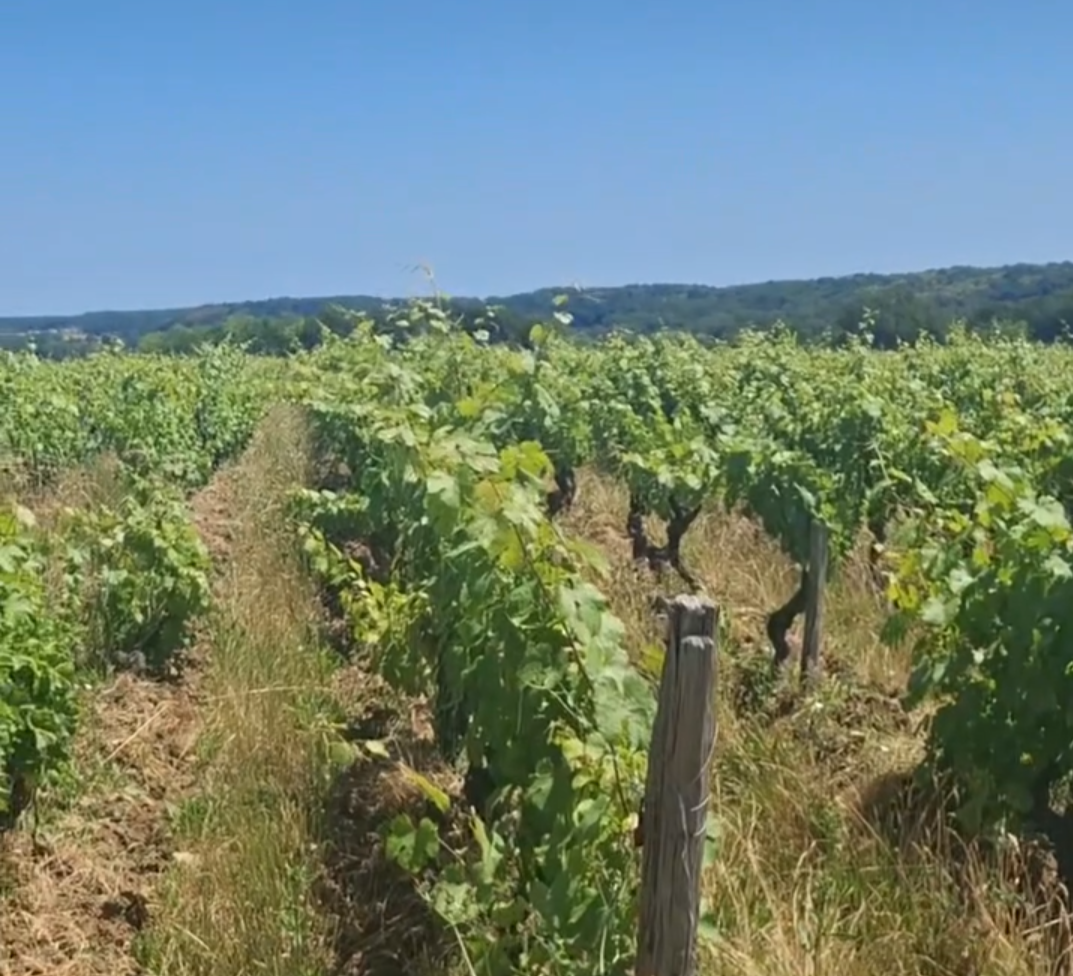
When we were in France, one of the things that came up in almost every conversation with a winemaker was the weather. We expected that, particularly given how hot it was while we were there, but what I didn't expect was how much the conversation would come back to harvest dates and how dramatically the growing season has changed over the last few generations.
We met Isabel at Champagne Leriche, one of the producers we're going to start working with, and during our conversation we started talking about how quickly grapes are ripening these days. She told me that her grandmother used to harvest in October, her mother harvested in September, and she is now harvesting in August. Obviously, harvest dates vary considerably between regions and from one vintage to another, so one family's experience isn't a universal measurement, but it really brought home the scale of the change.
The broader trend is clear. French vineyards are harvesting significantly earlier than they did several decades ago, and warmer growing conditions are one of the major reasons. The grapes are reaching maturity more quickly, which might sound like a positive thing, but for a winemaker, getting grapes ripe is only part of the challenge. The real goal is to achieve the right balance of sugar, acidity, flavour and structure.
That's particularly important in regions such as Champagne and Burgundy, where freshness and acidity are fundamental to the wines. Champagne relies on naturally high acidity to give the wines their energy and longevity, while great Burgundy is all about the balance between ripe fruit, freshness and structure. If grapes ripen too quickly, maintaining that balance becomes more difficult.
We saw some of this firsthand in Burgundy, where temperatures reached around 40°C while we were there. It was striking to be standing in Pinot Noir and Chardonnay vineyards in that kind of heat, particularly knowing that these are regions whose reputations were built around relatively cool growing conditions and gradual ripening.
The heat isn't the only issue, either. Across the regions we visited, we heard producers talking about drought, water stress, hail and increasingly unpredictable weather. Climate change isn't simply a story about temperatures gradually getting warmer; for the people actually farming these vineyards, it's increasingly about dealing with more extreme and less predictable conditions.
That was particularly obvious when we heard from Benjamin Séré in Vouvray. We visited Benjamin earlier in the trip, when it was already hot and the vines were beginning to show signs of water stress. After we'd left France, he sent us a message telling us that a hailstorm had gone through his vineyards and destroyed more than half of his crop.
For a small family domaine, that's devastating. These aren't enormous agricultural businesses with vineyards spread across hundreds of hectares. The people we work with are often farming the vineyards themselves, making the wine, managing the sales and trying to make a living from a relatively small amount of land. Losing half a vintage to a hailstorm can have a huge impact on the economics of the entire business.
What I found most encouraging, though, was that the younger generation of winemakers isn't simply waiting to see what happens. They're already adapting. They're experimenting with farming techniques, looking at different vineyard sites and reconsidering the grape varieties that they grow.
Fred Gouffier in the Côte Chalonnaise is a great example. Fred is one of the most progressive winemakers we work with, and he's constantly thinking about what Burgundy might look like in ten or twenty years rather than simply repeating what has always been done. He's experimenting with varieties such as Melon de Bourgogne alongside Aligoté, partly because they can help retain freshness as temperatures increase.
This was probably the biggest thing I took away from the trip. Climate change isn't something French winemakers are waiting for; they're already dealing with it, and they're making decisions today that could shape the wines of the next few decades.
French wine has always evolved, but the pace of change now feels very different. The younger generation is inheriting centuries of knowledge while also having to deal with conditions that their parents and grandparents didn't experience in quite the same way.
That's one of the reasons we find these producers so interesting at Vintrepid. We're not simply looking for famous names or wines that have already become fashionable. We're looking for people who are thinking about the future, experimenting with their vineyards and making wines that we believe will still be exciting ten or twenty years from now.
After spending two weeks travelling through France and talking to the people dealing with these changes firsthand, I'm not sure exactly what French wine will look like in the future. But I do think it's going to be very interesting.

Share:
Why We Chose Our First Champagne Producer